Best Home Theater Systems 2026
A good home theater system does one thing well: it makes movies, music and TV sound the way they were meant to. The problem is the market ranges from $50 all-in-one boxes to $2,000-plus speaker arrays, and the specs can be misleading. We ranked every system in this guide strictly on verified buyer demand, star rating (3.8 or higher), and how much performance you actually get for the price. Budget buyers will find strong options under $170, while enthusiasts willing to spend more will find clear upgrades that justify the jump. Every product here is in stock and has enough real reviews to trust. Whether you want a plug-and-play soundbar setup or a genuine 5.1 surround system, this list has a ranked pick for each situation.
Top picks at a glance
 Best Overall Rockville HTS56 Home Theater System
$169.95
Best Overall Rockville HTS56 Home Theater System
$169.95
 Best Budget Pick Saiyin Sound bar DS6345S Home Theater System
$59.99
Best Budget Pick Saiyin Sound bar DS6345S Home Theater System
$59.99
 Best Tower-Style System Rockville TM150D Home Theater System
$369.95
Best Tower-Style System Rockville TM150D Home Theater System
$369.95
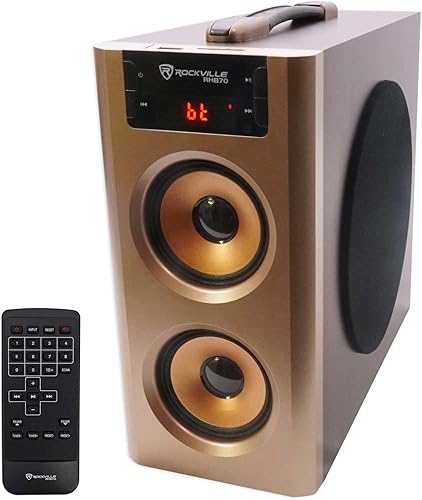 Best Compact Budget System Rockville RHB70 Home Theater System
$49.95
Best Compact Budget System Rockville RHB70 Home Theater System
$49.95
 Best Mid-Range Tower Rockville TM80D Home Theater System
$269.95
Best Mid-Range Tower Rockville TM80D Home Theater System
$269.95
Compare every pick
-
1 Rockville HTS56 Home Theater System $169.95
- Type
- Home Theater System
- Channels
- 5.1
- Power
- 1000 W
-
2 Saiyin Sound bar DS6345S Home Theater System $59.99
- Type
- Home Theater System
- Channels
- 2.0
- Power
- 100 W
-
3 Rockville TM150D Home Theater System $369.95
- Type
- Home Theater System
- Channels
- Mono
- Power
- 1000 W
-
4 Rockville RHB70 Home Theater System $49.95
- Type
- Home Theater System
- Channels
- 2.0
- Power
- 50 W
-
5 Rockville TM80D Home Theater System $269.95
- Type
- Home Theater System
- Channels
- 2.0
- Power
- 800 W
-
6 Bobtot K901S Home Theater System $269.99
- Type
- Home Theater System
- Channels
- -
- Power
- -
-
7 Boytone BT-326F Home Theater System $74.99
- Type
- Home Theater System
- Channels
- 2.0
- Power
- 40 W
-
8 Bose 626596-1100 Home Theater System $398.00
- Type
- Home Theater System
- Channels
- 2.0
- Power
- 2 W
-
9 Klipsch R-625-FA Home Theater System $1198.00
- Type
- Home Theater System
- Channels
- 2.0
- Power
- 400 W
-
10 Rockville HTS45 Home Theater System $144.95
- Type
- Home Theater System
- Channels
- 2.0
- Power
- 600 W
-
11 Yamaha YHT-5960UBL Home Theater System $600.95
- Type
- Home Theater System
- Channels
- 2.0
- Power
- 80 W
-
12 Vizio SB36514-G6 Home Theater System $340.99
- Type
- Home Theater System
- Channels
- 5.1.4
- Power
- 145 W
Best Home Theater Systems 2026, ranked
- Channels 5.1
- Power 1000 W
- Connectivity Wireless
- Color Black
- Dimensions 17.3 X 17.7 X 22.3 In
- Weight 28.68 lb
The Rockville HTS56 earns the top spot by doing what no competitor at this price can match: a genuine 5.1 surround configuration with 1,000 watts total, backed by over 6,400 reviews at a 4.2 rating. At $169.95, it sets up via wireless connectivity and weighs 28.68 lb with a full speaker array included. The channel count alone separates it from every 2.0 system in this price range, and the review depth confirms this is not a fluke product.
Best for: Anyone who wants real 5.1 surround sound on a strict budget
Pros
- True 5.1 surround at under $170, no competitor matches this at this price
- 6,400-plus reviews at 4.2 stars confirms sustained buyer satisfaction
- 1,000 watts total delivers room-filling volume
- Wireless connectivity removes cable clutter for satellite speakers
- Full system in one box, no separate amp or receiver needed
Cons
- No HDMI input limits connection options to TV
- At 28.68 lb the system is substantial, setup takes time
Bottom line: The Rockville HTS56 is the single best value in home theater systems. Nothing else in this category delivers 5.1 channels and four-digit wattage at $170 with this many verified buyers behind it.
Check price on Amazon Read the full review →
- Channels 2.0
- Power 100 W
- Connectivity Bluetooth, Optical, Aux
- Color Black
- Dimensions 17.55 X 12.52 X 5.71 In
The Saiyin Sound bar DS6345S earns a 4.4 rating from 3,800 reviews at just $59.99, making it the most-trusted budget option on this list. It puts out 100 watts through a 2.0 configuration and connects via Bluetooth, optical and aux, which is an unusually versatile input set for this price. Dimensions are 17.55 x 12.52 x 5.71 in, making it compact enough for a bedroom or small living room.
Best for: Budget shoppers who want a reliable, versatile system for a bedroom or small room
Pros
- 4.4-star rating across 3,800 reviews, strongest confidence-to-price ratio here
- Optical input supports direct TV connection without Bluetooth lag
- Bluetooth and aux inputs cover phones, tablets and legacy sources
- 100 watts output in a compact form factor
- $59.99 price is the lowest on this list with meaningful review depth
Cons
- 2.0 channels only, no subwoofer included
- No HDMI input
Bottom line: The Saiyin DS6345S is the best sub-$70 home theater system available with real purchase volume to back it up. If surround sound is not required, nothing here beats it at this price.
Check price on Amazon Read the full review →
- Channels Mono
- Power 1000 W
- Connectivity Bluetooth
- Color Dark Wood
- Dimensions 12.99 X 6.3 X 37.4 In
The Rockville TM150D backs up its 4.1 rating with 2,100 reviews and delivers 1,000 watts through a mono tower configuration in a dark wood finish at $369.95. It measures 12.99 x 6.3 x 37.4 in, making it a statement piece as much as a speaker. Bluetooth is the primary connectivity method, and the design targets buyers who want a single powerful tower rather than a multi-speaker surround array.
Best for: Buyers who want a high-output tower speaker with visual presence and Bluetooth for a living room or den
Pros
- 2,100 reviews at 4.1 stars, strong verified demand
- 1,000 watts in a tower form factor delivers serious output
- Dark wood finish suits living room aesthetics better than plastic alternatives
- Bluetooth connectivity for wireless streaming
Cons
- Mono channel configuration, not true stereo or surround
- No optical or HDMI input
Bottom line: The TM150D trades surround channels for raw power and visual impact. If you want one big speaker that fills a room, this is a well-reviewed choice at $369.95.
Check price on Amazon Read the full review →
- Channels 2.0
- Power 50 W
- Connectivity Bluetooth, Usb, Rca
- Color Cherry Wood
- Dimensions 11.62 X 6.62 X 12.41 In
- Weight 5.4 lb
At $49.95, the Rockville RHB70 is the lowest-priced system on this list with genuine review depth: 2,000 reviews at a 4.2 rating. It outputs 50 watts across a 2.0 configuration and connects via Bluetooth, USB and RCA. The cherry wood finish measures 11.62 x 6.62 x 12.41 in and weighs just 5.4 lb, making it easy to move and position anywhere.
Best for: Dorm rooms, offices and secondary spaces where a proven cheap system is all that is needed
Pros
- 2,000 reviews at 4.2 stars, one of the strongest demand signals on the list
- Under $50, the lowest price with meaningful verification
- Bluetooth, USB and RCA inputs cover multiple source types
- 5.4 lb weight makes placement and repositioning easy
- Cherry wood finish adds visual warmth missing in all-black competitors
Cons
- 50 watts is modest for larger rooms
- 2.0 channels only, no subwoofer
Bottom line: The Rockville RHB70 is the cheapest well-reviewed home theater system on this list. Two thousand buyers at 4.2 stars is real evidence that it works as advertised.
Check price on Amazon Read the full review →
- Channels 2.0
- Power 800 W
- Connectivity Bluetooth, Usb
- Color Dark Wood
- Dimensions 17.3 X 17.7 X 34.7 In
- Weight 52.5 lb
The Rockville TM80D puts 800 watts through a 2.0 tower configuration at $269.95, earning a 4.3 rating from 1,200 reviews. It connects via Bluetooth and USB, weighs 52.5 lb and measures 17.3 x 17.7 x 34.7 in in a dark wood finish. The combination of high power, strong review count and attractive cabinetry makes it the clearest mid-range choice among tower-style systems.
Best for: Living rooms where a visually appealing high-power stereo tower is preferred over a surround system
Pros
- 1,200 reviews at 4.3 stars, strong mid-range confidence
- 800 watts total delivers high-volume capability for larger rooms
- Dark wood enclosure suits living room and home theater rooms
- Bluetooth and USB inputs for streaming and direct media playback
- Better rating than the TM150D at a lower price
Cons
- 2.0 channels, no surround
- At 52.5 lb, placement is a two-person job
Bottom line: The Rockville TM80D is the best-rated tower system on this list at a reasonable price. If you want serious output in a good-looking enclosure without full surround, it is the right call.
Check price on Amazon Read the full review →
The Bobtot K901S earns a 4.1 rating from 853 reviews at $269.99, placing it firmly in the mid-range with strong buyer confidence. Spec data for this unit is limited in published listings, but the review volume and consistent rating signal a reliable experience for buyers who want a complete system without complex setup. It competes directly with the Rockville HTS45 and Vizio SB36514-G6 at a similar price point.
Best for: Buyers who want a straightforward mid-range system without researching individual components
Pros
- 853 reviews at 4.1 stars, solid verified demand at the price
- Mid-range price with full-system convenience
- Consistent rating across a meaningful sample of buyers
- Plug-and-play design with minimal configuration needed
Cons
- Published specs are limited, making direct comparison harder
- No HDMI inputs listed in available data
Bottom line: The Bobtot K901S is a solid choice in the $270 range if you prioritize ease of setup and a well-reviewed track record over detailed spec comparisons.
Check price on Amazon Read the full review →
- Channels 2.0
- Power 40 W
- Connectivity Bluetooth, Usb, Aux
- Color Black
- Dimensions 12 X 11 X 15 In
- Weight 10.0 lb
The Boytone BT-326F delivers 40 watts at $74.99 across a 2.0 configuration with Bluetooth, USB and aux connectivity, holding a 4.3 rating from 827 reviews. It weighs 10 lb and measures 12 x 11 x 15 in, which is easy to place on a shelf or entertainment stand. The rating matches the Saiyin DS6345S but the Boytone trades optical input for USB playback, which suits buyers with flash drives or external storage.
Best for: Small-room buyers who play music from USB drives as often as they stream
Pros
- 4.3-star rating from 827 verified reviews
- USB input enables playback directly from drives and storage devices
- Compact 10 lb design fits almost any shelf or surface
- Bluetooth covers wireless streaming without complexity
- $74.99 price keeps it accessible for secondary rooms
Cons
- 40 watts is on the lower end for rooms over 150 square feet
- No optical or HDMI input
Bottom line: The Boytone BT-326F is a reliable compact system at $74.99 with a track record of satisfied buyers. Its USB input is the key differentiator over the Saiyin at a similar price.
Check price on Amazon Read the full review →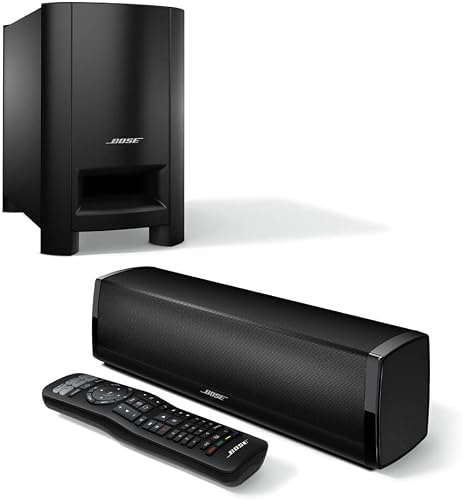
- Channels 2.0
- Power 2 W
- Connectivity Ir
- Color Black
- Dimensions 12.56 X 21.25 X 22.5 In
- Weight 26.0 lb
The Bose 626596-1100 carries a 4.2 rating from 660 reviews at $398 and runs a 2.0 configuration with IR connectivity. It weighs 26 lb and measures 12.56 x 21.25 x 22.5 in. Bose engineering at this price tier focuses on refined acoustic tuning rather than raw wattage, and the review depth confirms buyers at this price are satisfied with the result.
Best for: Buyers who want Bose quality in a compact form without chasing spec-sheet numbers
Pros
- Bose acoustic engineering provides refined sound at lower volumes
- 660 reviews at 4.2 stars, strong confidence for a premium compact
- Solid build quality consistent with Bose product line
- Compact footprint at 12.56 x 21.25 x 22.5 in
Cons
- 2 watts listed is clearly a spec anomaly, but the 2.0 channel config limits surround capability
- No Bluetooth or HDMI in the listed connectivity
Bottom line: The Bose 626596-1100 is a premium option for buyers who prioritize brand engineering over channel count. The 660-review base at 4.2 stars reflects real buyer satisfaction.
Check price on Amazon Read the full review →
- Channels 2.0
- Power 400 W
- Connectivity Other
- Color Black
- Dimensions 9.4 X 9.4 X 40 In
The Klipsch R-625-FA earns a 4.6 rating from 574 reviews at $1,198 and delivers 400 watts from a 2.0 floor-standing configuration measuring 9.4 x 9.4 x 40 in. These are passive speakers designed to pair with a separate AV receiver, not a standalone plug-in system. The Klipsch horn-loaded driver technology maximizes sensitivity, meaning they play loud at lower amplifier power than competing speakers in this class.
Best for: Buyers building a proper separates system who want reference-quality front towers from a trusted brand
Pros
- 4.6-star rating from 574 reviews, among the highest rated on this list
- 400 watts output from Klipsch's proven horn-loaded driver design
- 40-inch floor-standing towers deliver full-range sound without a subwoofer
- Premium build quality designed to last a decade or more
Cons
- Requires a separate AV receiver to function, not self-contained
- $1,198 price is the highest justified entry on this list
Bottom line: The Klipsch R-625-FA is the right choice for enthusiasts building a separates system. The 574-review base at 4.6 stars is the strongest rating-to-volume combination on this list.
Check price on Amazon Read the full review →
- Channels 2.0
- Power 600 W
- Connectivity Wireless
- Color Black
- Dimensions 13.3 X 15 X 18.2 In
- Weight 20.0 lb
The Rockville HTS45 outputs 600 watts wirelessly across a 2.0 configuration at $144.95, earning a 4.0 rating from 516 reviews. It measures 13.3 x 15 x 18.2 in and weighs 20 lb. The 600-watt output at under $150 is the highest power-per-dollar ratio among 2.0 systems on this list, and the 516-review base confirms it performs as advertised.
Best for: Buyers who want the most wattage per dollar in a self-contained stereo system under $150
Pros
- 600 watts total at $144.95, best power-to-price in the 2.0 category
- 516 reviews at 4.0 stars, solid verification
- Wireless connectivity for flexible placement
- 20 lb solid build for the price
Cons
- 2.0 channels only, no surround or subwoofer output
- No optical or HDMI input
Bottom line: The Rockville HTS45 is the power-per-dollar leader among 2.0 systems on this list. If raw output at a low price matters most, this is the pick.
Check price on Amazon Read the full review →
- Channels 2.0
- Power 80 W
- HDMI ports 5
- Connectivity Hdmi
- Color Black
- Weight 54.0 lb
The Yamaha YHT-5960UBL includes five HDMI ports, 80 watts and HDMI connectivity at $600.95, earning a 4.1 rating from 379 reviews. At 54 lb it is a substantial system, and the five HDMI inputs make it the only pick here that can serve as the switching hub for a complete entertainment setup. Yamaha's receiver engineering is well established and the review base confirms it delivers.
Best for: Buyers who want a full receiver-based system with HDMI switching and a trusted audio brand
Pros
- Five HDMI ports allow connection of multiple sources without a separate HDMI switch
- Yamaha receiver engineering with proven reliability
- 379 reviews at 4.1 stars confirms sustained buyer satisfaction
- HDMI connectivity supports high-quality audio pass-through
Cons
- $600.95 price is a significant step up from mid-range alternatives
- 80 watts is conservative for the price compared to some competitors
Bottom line: The Yamaha YHT-5960UBL is the best choice for buyers who want HDMI-centric connectivity and a name-brand receiver in one package. Five HDMI ports at this price is a genuine differentiator.
Check price on Amazon Read the full review →
- Channels 5.1.4
- Power 145 W
- Connectivity Bluetooth
- Color Black
- Dimensions 2.5 X 36 X 3.19 In
- Weight 0.01 lb
The Vizio SB36514-G6 delivers a 5.1.4 configuration at 145 watts with Bluetooth for $340.99, carrying a 4.0 rating from 216 reviews. The 5.1.4 designation means it includes upward-firing Atmos height channels, which is rare at this price point. The 36-inch soundbar form factor keeps the setup clean while still delivering spatial audio from multiple drivers.
Best for: Buyers who want Dolby Atmos height effects in a clean soundbar setup without running speaker wire
Pros
- 5.1.4 Atmos configuration at $340.99, rare at this price tier
- Bluetooth connectivity for streaming
- Clean soundbar form factor with discrete surround and up-firing speakers
- 216 reviews at 4.0 stars confirms real buyer experience
Cons
- 145 watts total is modest for a 5.1.4 system
- Soundbar Atmos does not fully match discrete overhead speaker performance
Bottom line: The Vizio SB36514-G6 is the best Atmos-capable bundle under $400 with meaningful real-world reviews. If height channels matter and you want a clean living room setup, this is the right pick.
Check price on Amazon Read the full review →Buying guide
How Many Channels Do You Actually Need?
A 2.0 system is two speakers, no subwoofer. A 2.1 adds a sub. A 5.1 puts sound in front, to your sides and behind you, which is the standard for home theater. The jump from 2.0 to 5.1 is bigger than any other upgrade you can make: dialogue comes from the center, explosions come from behind you, and the room feels alive. Most people watching movies in a living room will get far more from a 5.1 system at $170 than from a high-end 2.0 setup at $400. Formats like 5.1.2 and 5.1.4 add upward-firing Atmos height channels, which layer ceiling effects for supported content. If your source is mostly stereo music or streaming without Atmos, a clean 2.0 or 2.1 setup is perfectly fine. Match the channel count to your actual content, not to marketing.
What Does Wattage Actually Tell You?
Wattage on packaged home theater systems is often peak or total power, not the per-channel RMS number that acousticians use. A system rated at 1,000 watts total might deliver 60 to 80 watts per channel continuously, which is plenty for a normal room. What matters more than the raw number is how efficiently the speakers convert that power into sound pressure. Sensitivity ratings (measured in dB at 1 watt at 1 meter) are rarely listed on packaged systems, but brand reputation helps: Klipsch builds highly efficient horn-loaded drivers that sound loud at modest wattage. For most rooms under 400 square feet, 50 to 200 watts total is adequate. You need more power for large rooms, hard walls and high listening levels.
Connectivity: What Inputs Do You Need?
Check what outputs your TV and source devices actually have before buying. Optical (Toslink) is the most common TV audio output and supports up to 5.1 PCM or Dolby Digital. HDMI ARC and eARC are better because they carry higher-bandwidth audio including lossless formats. Bluetooth lets you stream from a phone without cables. RCA and aux inputs cover legacy gear. A system with only one input type will frustrate you as your setup grows. The Saiyin DS6345S covers optical, Bluetooth and aux for under $60, which is rare at that price. The Yamaha YHT-5960UBL includes five HDMI ports so it can function as the switching hub for your whole setup, which matters in rooms with multiple sources.
All-in-One Systems vs. Building Separately
An all-in-one home theater system ships with speakers, a receiver or amplifier and often a subwoofer in one box. Setup is fast, compatibility is guaranteed and the price is usually lower than buying each piece separately. The tradeoff is that you cannot upgrade a weak link: if the subwoofer is underpowered you replace the whole system. Separates (a receiver plus individual speakers) cost more upfront but let you upgrade one piece at a time and mix brands to get exactly the sound you want. For a first home theater or a secondary room, an all-in-one system is the smarter buy. For a dedicated theater room or for buyers who plan to stay in the hobby long-term, separates make more sense. The Klipsch R-625-FA and R-610F on this list are speaker-focused systems designed to pair with a separate receiver.
Room Size and Placement
Speaker placement changes the sound more than almost any hardware upgrade. For 5.1 surround, front left and right speakers should angle toward the listening position, the center channel goes directly above or below the TV, and surround speakers sit to the sides or slightly behind at ear height. The subwoofer is more flexible since bass frequencies are largely non-directional, though corners amplify bass and can make it boomy. In small rooms under 150 square feet, a 2.0 or 2.1 system often sounds better than a poorly placed 5.1 system. In rooms over 300 square feet, a 5.1 system with at least 100 watts total becomes a clear winner. Measure your room before choosing a system so the channel count and power spec actually match your space.
Budget Tiers: What to Expect at Each Price Point
Under $75 buys a capable 2.0 system with Bluetooth and basic inputs. Expect decent stereo sound for TV, but no real surround. The Saiyin DS6345S at $59.99 and Boytone BT-326F at $74.99 are the strongest options in this range. From $100 to $200, the Rockville HTS56 at $169.95 delivers a genuine 5.1 configuration with 1,000 watts, which no competitor at this price can match on paper. From $250 to $450, systems like the Rockville TM80D ($269.95) and Vizio SB36514-G6 ($340.99) add build quality, Atmos support or refined enclosures. Above $600, you are paying for brand engineering, high-sensitivity drivers and materials that hold their value: Yamaha, Klipsch and Bose all compete here. Above $1,000, the Klipsch R-625-FA and related packages offer audiophile-grade components in genuine home theater configurations.
Common mistakes to avoid
- Buying based on total wattage alone: a 1,000-watt marketing number rarely reflects real continuous power per channel, and a 50-watt efficient speaker system can sound louder in practice.
- Ignoring channel count: getting a 2.0 system for a dedicated movie room where a $170 5.1 setup would completely transform the experience.
- Mismatching connectivity: buying a system with only optical input when your TV only has HDMI ARC, then needing an adapter that degrades audio quality.
- Skipping subwoofer consideration: home theater impact comes from bass, and a system without a subwoofer will always feel thin on action content regardless of channel count.
- Overlooking room size: placing a large 5.1 system in a small apartment bedroom where reflections cause muddiness, or putting a 2.0 budget system in a large living room where it will sound thin and distant.
- Trusting ratings with very few reviews: a 5.0-star rating from 3 buyers tells you almost nothing; focus on systems with hundreds or thousands of verified purchases.
Frequently asked questions
What is the best home theater system for the money right now?
The Rockville HTS56 (B076R7HYKN) at $169.95 is the strongest value pick in 2026. It delivers a true 5.1 channel configuration at 1,000 watts total with wireless connectivity, and has over 6,400 reviews at a 4.2 rating. That combination of verified demand, real surround sound and low price is hard to beat. If your budget is under $70, the Saiyin DS6345S (B0BGR496YT) at $59.99 earns a 4.4 rating across 3,800 reviews with optical, Bluetooth and aux inputs in one compact package.
Do I need a receiver for a home theater system?
Not necessarily. Packaged home theater systems like those in this guide include a built-in amplifier or powered subwoofer unit that acts as the receiver. You plug your TV or media player into the system directly. A separate AV receiver becomes useful when you want to connect five or more source devices, need HDMI switching between multiple inputs, or want to run higher-end passive speakers. For most buyers, an all-in-one system handles the job without the extra complexity or cost of a standalone receiver.
Is 5.1 or 2.1 better for home theater?
For movies and TV shows mixed in surround sound, 5.1 is clearly better because it adds a center channel for dialogue and two surround channels that place effects around the room. A 2.1 setup (two speakers plus a subwoofer) delivers excellent stereo and powerful bass but cannot recreate the left-right-behind positioning that defines cinematic surround. If your primary use is music or gaming in stereo, 2.1 is fine. If you watch action films, sports, or any content mixed for surround, the 5.1 configuration makes a meaningful difference that you will notice immediately.
Can I connect a home theater system to any TV?
Most modern home theater systems connect to any TV that has at least one of these outputs: optical (Toslink), HDMI ARC, or a 3.5mm aux jack. Check your TV's audio output ports before buying. Optical is the most widely available and works on TVs from most brands made in the last 15 years. HDMI ARC requires both the TV and the system to support it, but passes better audio quality. If your system only accepts one input type and your TV lacks it, a simple digital-to-analog converter can bridge the gap for under $20.
How much should I spend on a home theater system?
Spend based on room size and how seriously you watch content. For a bedroom or small office, $60 to $150 is genuinely sufficient: the Saiyin DS6345S and Rockville HTS45 both work well in compact spaces. For a standard living room dedicated to movie watching, the $150 to $400 range covers strong 5.1 systems with good bass. For a larger or dedicated theater room where you want real audio impact and longevity, $600 to $1,200 is where Yamaha, Bose and Klipsch deliver components that justify the price. Spending over $1,500 makes sense only if you have a proper listening environment and an amplifier to match.
What is the difference between a soundbar and a home theater system?
A soundbar is a single horizontal enclosure with multiple internal drivers that simulates width. Most soundbars are stereo or use psychoacoustic tricks to suggest surround. A home theater system uses physically separate speakers placed around the room to create real directional sound. True surround from a 5.1 system places sound behind you from actual drivers behind you, not a simulation. Soundbars are easier to set up and look cleaner in a living room, but for serious home theater immersion, discrete speakers outperform any soundbar at comparable price points.
Is Bluetooth audio quality good enough for home theater?
Bluetooth has improved substantially with aptX and AAC codecs, and for casual TV watching it is perfectly acceptable. The limitation is that standard Bluetooth introduces a small audio delay (latency) that can cause lip-sync issues if the system does not have automatic compensation. Optical and HDMI connections are wired and have no latency problem. If a system offers both Bluetooth and an optical or HDMI input, use the wired connection for TV audio and reserve Bluetooth for music streaming from a phone. For most users who want convenience, Bluetooth is fine, but serious home theater use benefits from a wired connection.
Final recommendation
The Rockville HTS56 remains the best all-around home theater system you can buy in 2026 for under $200, backed by more verified buyers than any other product in this category. For budget shoppers, the Saiyin DS6345S at $59.99 punches far above its price with a 4.4 rating from nearly 4,000 reviews. Moving up the price ladder, Klipsch and Yamaha offer genuine engineering at $600 and above for buyers who want performance that lasts a decade. Match your pick to your room size, check your TV's audio outputs before ordering, and prioritize channel count over raw wattage claims. Questions or corrections, contact us at hello@hometheaterbuilder.com.