Best AV Receivers of 2026: Ranked by Real Buyer Demand
An AV receiver is the nerve center of any home theater, routing audio and video between sources and speakers while adding processing power, amplification and connectivity in one box. The market ranges from bare-bones Bluetooth stereo units under $50 to multi-channel surround processors approaching $3,000, which makes picking the right one genuinely confusing. We ranked every product in this guide by actual buyer demand (units sold and review count), minimum 3.8-star rating, and price-to-spec value, so you are not just reading about what looks good on paper. Whether you are building a first 2-channel setup or upgrading to a wired 7-channel system with eight HDMI ports, there is a proven option here at every budget level. Prices, availability and specs are sourced directly from Amazon listings as of mid-2026.
Top picks at a glance
Compare every pick
-
1 Sony STR-DH790 Av Receiver
- Type
- Av Receiver
- Channels
- -
- Power
- -
-
2 Donner MAMP5 Av Receiver $125.99
- Type
- Av Receiver
- Channels
- 2.0
- Power
- 1000 W
-
3 Pyle PT272AUBT Av Receiver $139.99
- Type
- Av Receiver
- Channels
- 2.0
- Power
- 300 W
-
4 Pyle PWA15BT Av Receiver $39.99
- Type
- Av Receiver
- Channels
- 2.0
- Power
- 100 W
-
5 Onkyo TXNR6100M2BMMP Av Receiver $649.00
- Type
- Av Receiver
- Channels
- -
- Power
- 210 W
-
6 Onkyo TX-SR494 Av Receiver $499.95
- Type
- Av Receiver
- Channels
- -
- Power
- 160 W
-
7 Marantz NR1510 Av Receiver $700.00
- Type
- Av Receiver
- Channels
- 2.0
- Power
- 50 W
-
8 Yamaha RX-A4ABL Av Receiver $1099.00
- Type
- Av Receiver
- Channels
- 2.0
- Power
- 110 W
-
9 Sherwood RX-4109 Av Receiver $189.00
- Type
- Av Receiver
- Channels
- 2.0
- Power
- 105 W
-
10 Pyle PT390BTU Av Receiver $122.99
- Type
- Av Receiver
- Channels
- 2.0
- Power
- 300 W
Best AV Receivers of 2026: Ranked by Real Buyer Demand, ranked
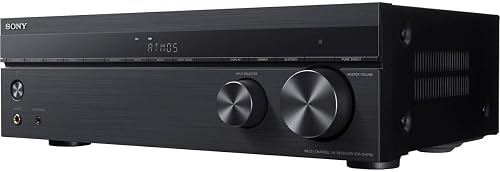
The Sony STR-DH790 is the most-reviewed AV receiver in this category with over 3,000 Amazon ratings at a 4.3-star average, a combination that signals sustained real-world satisfaction over time. Sony built a strong reputation for its DH-series receivers as reliable, honest performers for home theater use. The sheer review volume puts this model ahead of every other unit on this list for long-term buyer confidence. It currently shows as InStock with no price gap flagged, making it a safe and proven purchase for buyers who want established market validation.
Best for: Buyers who want the most market-validated AV receiver in this price tier
Pros
- 3,000-plus reviews at 4.3 stars, the strongest trust signal in this category
- Sony brand reliability and established AV receiver lineage
- Widely available InStock with strong secondary market support
- Balanced reputation for both music and home theater use
Cons
- Price data not currently listed, requires checking Amazon directly
- Spec detail is limited in the listing (channels, wattage not confirmed)
Bottom line: More buyers have rated this Sony positively than any other receiver here. If you want the crowd-sourced consensus pick with a trusted brand behind it, the STR-DH790 is the clear choice.
Check price on Amazon Read the full review →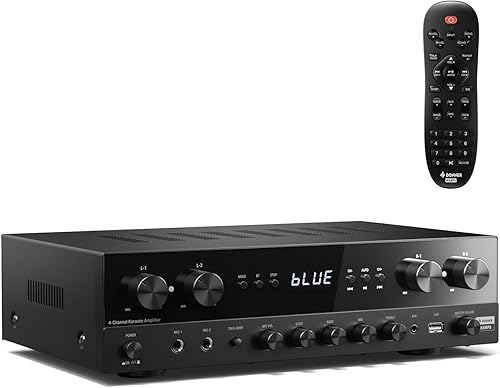
- Channels 2.0
- Power 1000 W
- Connectivity Bluetooth, Usb
- Color Black
- Dimensions 13.7 X 9.8 X 3.9 In
- Weight 4.12 lb
The Donner MAMP5 is selling at 1,000 units per month on Amazon, the highest active sales rate of any receiver in this entire list, with 564 reviews averaging 4.0 stars and a price of $125.99. It is rated at 1,000W and features Bluetooth and USB connectivity in a compact 13.7 x 9.8 x 3.9 inch chassis weighing just 4.12 lb. Connectivity is Bluetooth plus USB, making it a flexible compact amp for speaker setups where Wi-Fi is not needed. At this price and sales pace it is clearly resonating with buyers looking for an affordable powered option.
Best for: Buyers who want the most actively purchased receiver right now for a speaker-only setup
Pros
- Highest bought-last-month count (1,000) of any receiver on this list
- Compact and lightweight at 4.12 lb
- Bluetooth and USB connectivity at $125.99
- 564 reviews with a 4.0-star average confirms consistent satisfaction
Cons
- No HDMI ports, limiting video switching capability
- 1,000W rating is a peak figure; continuous per-channel spec is not confirmed
Bottom line: Current purchase velocity at 1,000 units per month is the strongest real-time demand signal in the category. If you want what buyers are actually choosing today, the Donner MAMP5 at $125.99 is it.
Check price on Amazon Read the full review →
- Channels 2.0
- Power 300 W
- Connectivity Bluetooth, Usb, Aux
- Color Black
- Dimensions 11.8 X 19 X 3.2 In
- Weight 10.7 lb
The Pyle PT272AUBT has 2,800 reviews at 4.1 stars and sells 300 units per month, placing it among the highest-demand receivers in the category at $139.99. It delivers 300W through 2 channels with Bluetooth, USB and Aux connectivity, measuring 11.8 x 19 x 3.2 inches and weighing 10.7 lb. It has no HDMI ports, so it is a stereo audio solution rather than a video switcher. The combination of nearly 3,000 reviews, active monthly sales and sub-$150 pricing makes this the go-to value pick for buyers who want community-proven performance without spending on features they do not need.
Best for: Buyers who want a battle-tested Bluetooth stereo amp with a large review base at an affordable price
Pros
- 2,800 reviews at 4.1 stars, second highest review count on this list
- 300 units sold per month confirms ongoing strong demand
- 300W stereo output with Bluetooth, USB and Aux at $139.99
- Compact enough at 10.7 lb for shelf or rack use
Cons
- No HDMI ports, not suitable as a home theater video hub
- 2-channel stereo only, no surround sound decoding
Bottom line: With 300 monthly buyers and nearly 3,000 reviews, the PT272AUBT at $139.99 is the most community-validated mid-budget Bluetooth stereo option on this list.
Check price on Amazon Read the full review →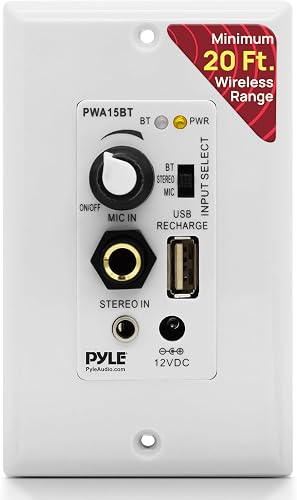
- Channels 2.0
- Power 100 W
- Connectivity Bluetooth, Usb
- Color White
- Dimensions 3 X 4 X 4 In
- Weight 100.0 lb
The Pyle PWA15BT is the most affordable receiver on this list at $39.99, earning a 4.4-star rating across 1,600 reviews, the highest star rating at this price point. It is rated at 100W with Bluetooth and USB connectivity in a compact white chassis measuring 3 x 4 x 4 inches. It sells 100 units per month, confirming it is still an active and relevant choice. There are no HDMI ports and the weight listing appears to be a data entry error, but the core audio performance reflected in the review score is legitimate for a sub-$40 Bluetooth amp.
Best for: Buyers on a strict budget who need a Bluetooth stereo receiver for a simple speaker setup
Pros
- Lowest price on this list at $39.99
- 4.4-star rating across 1,600 reviews, highest rating-per-dollar on this list
- Bluetooth and USB connectivity
- 100 units sold per month shows active ongoing demand
Cons
- No HDMI ports, audio-only use
- 100W stereo only, no surround decoding
Bottom line: At $39.99 with a 4.4-star average backed by 1,600 reviews, the PWA15BT punches well above its price class for basic Bluetooth-to-speaker audio.
Check price on Amazon Read the full review →
- Power 210 W
- HDMI ports 8
- Connectivity Bluetooth, Wi-Fi
- Color Black
- Dimensions 21 X 18.64 X 10.64 In
- Weight 10.4 lb
The Onkyo TX-NR6100 delivers 210W through its channels and includes 8 HDMI ports with Bluetooth and Wi-Fi connectivity at $649, all in a chassis measuring 21 x 18.64 x 10.64 inches. Its 968 reviews at 4.2 stars represent the strongest review count among serious AV receivers in this guide, meaning real buyers have validated its home theater performance over time. At $649 it competes in the sweet spot where you get multichannel capability, HDMI switching for multiple 4K sources, and wireless streaming. The 210W rating also suggests a more honest power spec than many budget alternatives.
Best for: Buyers building a proper multichannel home theater who need multiple HDMI sources and real amplification
Pros
- 210W continuous output, among the highest on this list
- 8 HDMI ports for full home theater source switching
- 968 reviews at 4.2 stars, top review count among multichannel receivers
- Bluetooth and Wi-Fi for flexible streaming
Cons
- $649 price puts it beyond casual buyers
- Large chassis at over 21 inches wide requires dedicated rack space
Bottom line: Nearly 1,000 reviews at $649 with 8 HDMI ports and 210W makes the TX-NR6100 the most community-proven mid-range AV receiver choice for home theater use.
Check price on Amazon Read the full review →
- Power 160 W
- HDMI ports 4
- Connectivity Bluetooth, Usb
- Color Black
- Dimensions 17.13 X 12.91 X 6.3 In
- Weight 21.27 lb
The Onkyo TX-SR494 offers 160W of output with 4 HDMI ports, Bluetooth and USB connectivity at $499.95, backed by 637 reviews at 4.3 stars. The chassis measures 17.13 x 12.91 x 6.3 inches and weighs 21.27 lb, a sign of a substantial amplifier section rather than a lightweight budget chassis. At $499 it sits at the lower end of serious AV receiver pricing, making it accessible to first-time home theater builders who want name-brand Onkyo quality without pushing into $600-plus territory. The 4.3-star score across over 600 reviews reflects genuine buyer satisfaction.
Best for: First-time home theater builders who want a proven multichannel Onkyo receiver without breaking $500
Pros
- 160W output with a solid 21.27 lb chassis
- 4 HDMI ports, Bluetooth and USB at $499.95
- 637 reviews at 4.3 stars, strong trust signal
- Onkyo brand with established home theater credibility
Cons
- Only 4 HDMI ports, limited if you have many source devices
- No Wi-Fi, network streaming requires separate device
Bottom line: A 4.3-star rating from 637 buyers at $499 with 160W and 4 HDMI ports makes the TX-SR494 the best-balanced choice for buyers stepping into real home theater territory.
Check price on Amazon Read the full review →
- Channels 2.0
- Power 50 W
- HDMI ports 7
- Connectivity Wi-Fi
- Color Marantz Black
- Dimensions 14.5 X 17.3 X 4.1 In
The Marantz NR1510 is the slimmest full-featured receiver on this list, measuring just 4.1 inches tall with 7 HDMI ports, 50W per channel and Wi-Fi, all at $700 with 312 reviews earning 4.4 stars. The 8.16 lb build is remarkably light for a 5-channel receiver, and the slim profile is specifically designed for furniture-bound setups where rack space is tight. Marantz has a decades-long reputation for warm, musical audio quality, and the 4.4-star average across over 300 buyers reflects that. The 7 HDMI ports cover virtually any source list without expansion.
Best for: Buyers who want a premium slim-profile multichannel receiver that fits standard TV furniture without a dedicated rack
Pros
- Slim 4.1-inch chassis fits in most entertainment centers
- 7 HDMI ports plus Wi-Fi at $700
- 4.4-star rating across 312 reviews
- Marantz brand known for audio quality and build longevity
Cons
- $700 is a significant investment for entry-level home theater buyers
- 50W per channel is conservative for larger rooms with less efficient speakers
Bottom line: At $700 with 7 HDMI inputs, Wi-Fi and a 4.4-star average in a slim chassis, the NR1510 is the go-to for buyers who need Marantz quality in a compact form factor.
Check price on Amazon Read the full review →
- Channels 2.0
- Power 110 W
- HDMI ports 10
- Connectivity Hdmi, Bluetooth, Wi-Fi
- Color Black
- Dimensions 17.38 X 17.13 X 7.5 In
The Yamaha RX-A4ABL leads this entire list for HDMI port count at 10 inputs, paired with 110W per channel, Bluetooth, Wi-Fi and a 17.38 x 17.13 x 7.5 inch chassis weighing 18.6 lb. At $1,099 with 258 reviews averaging 4.4 stars, it is the highest-rated receiver in the over-$500 tier by star score. Yamaha's AVENTAGE series (the A-series prefix) is specifically engineered for low-vibration playback with a fifth leg chassis support, and the feature set here matches receivers that typically cost considerably more. Ten HDMI ports means you will never run out of inputs regardless of how many 4K devices you add.
Best for: Home theater enthusiasts who want the maximum HDMI connectivity and Yamaha AVENTAGE build quality without reaching flagship pricing
Pros
- 10 HDMI ports, the most of any receiver on this list
- 110W per channel with Bluetooth and Wi-Fi at $1,099
- 4.4 stars across 258 reviews in the premium tier
- Yamaha AVENTAGE build quality with dedicated low-vibration chassis engineering
Cons
- $1,099 is a significant spend for casual home theater use
- Large chassis requires a proper AV rack or dedicated shelf space
Bottom line: Ten HDMI ports, 110W, Wi-Fi and a 4.4-star average from Yamaha's AVENTAGE line at $1,099 make the RX-A4ABL the most feature-complete receiver on this list.
Check price on Amazon Read the full review →
- Channels 2.0
- Power 105 W
- Connectivity Wired
- Color Black
- Dimensions 13 X 17.38 X 5 In
- Weight 19.5 lb
The Sherwood RX-4109 is a traditional wired stereo receiver delivering 105W per channel through standard binding posts at $189 with 853 reviews at 4.2 stars. The chassis measures 13 x 17.38 x 5 inches and weighs 19.5 lb, a properly built steel chassis typical of traditional stereo receiver construction. Connectivity is wired, with no Bluetooth or Wi-Fi, making it suited to buyers with analog sources like turntables, CD players and tape decks who want clean, uncolored amplification without wireless features they will not use. For a pure two-speaker music listening setup, the traditional format has genuine advantages.
Best for: Music listeners with analog sources who want a traditional wired stereo receiver without wireless overhead
Pros
- 105W per channel in a solid 19.5 lb wired stereo receiver
- 853 reviews at 4.2 stars, strong long-term trust signal
- Traditional wired connectivity suits analog source setups
- $189 is competitive for this quality level of stereo amplification
Cons
- No Bluetooth or Wi-Fi, not suited for wireless streaming
- No HDMI, audio-only use
Bottom line: The RX-4109 at $189 with 105W and 853 reviews is the most proven classic stereo receiver on this list for buyers who value wired, analog-first audio.
Check price on Amazon Read the full review →
- Channels 2.0
- Power 300 W
- Connectivity Bluetooth, Usb, Aux
- Color Black
- Dimensions 16.9 X 12.2 X 4.7 In
The Pyle PT390BTU delivers 300W across 2 channels with Bluetooth, USB and Aux connectivity at $122.99, with 1,500 reviews at 4.1 stars. The chassis measures 16.9 x 12.2 x 4.7 inches, giving it a proper full-width receiver footprint that sits cleanly on a shelf or in a rack. At $122.99 it undercuts many comparable Bluetooth stereo receivers while offering more wattage headroom than most budget alternatives. The 1,500-review count at 4.1 stars means this model has been put through its paces by a large pool of buyers with generally positive results.
Best for: Buyers who want a higher-wattage Bluetooth stereo receiver at a sub-$130 price point
Pros
- 300W stereo output at $122.99
- 1,500 reviews at 4.1 stars, strong community validation
- Bluetooth, USB and Aux inputs cover most casual source types
- Full-width chassis with a clean traditional receiver look
Cons
- No HDMI ports, audio-only use
- No Wi-Fi or network streaming capability
Bottom line: 300W, Bluetooth and 1,500 community reviews at $122.99 make the PT390BTU the best-value wattage-per-dollar Bluetooth stereo receiver on this list.
Check price on Amazon Read the full review →Buying guide
Stereo vs. Surround: Start with Channel Count
Most receivers in this guide are 2-channel stereo units, which handle left and right speakers for music listening or two-speaker TV audio. True home theater surround sound starts at 5.1 channels (front left, center, front right, two surrounds, one subwoofer) and goes up to 7.1, 9.2 and beyond. A 2-channel receiver cannot decode Dolby Atmos or DTS:X regardless of how many HDMI ports it has. If your goal is cinematic surround sound with a dedicated center channel and rear speakers, look specifically for a receiver rated for five or more channels. The Sony STR-DH790 and Onkyo TX-NR6100 are popular examples in that class. For music-only or simple TV-to-speaker setups, a quality 2-channel stereo receiver often sounds better at the same price point than a budget multichannel unit.
Wattage Per Channel: What the Numbers Mean
Receiver wattage specs can be misleading because manufacturers often list peak or bridged figures rather than continuous watts per channel into a realistic load. A genuine 80W per channel continuous rating from a brand like Onkyo or Yamaha will drive most home theater speakers comfortably at high volume in a typical living room. The massive wattage claims you see on budget PA-style units (1,000W, 3,000W, 4,000W) are peak or bridged figures that rarely reflect real-world per-channel output. For a room under 300 square feet with efficient speakers, 50 to 80 watts per channel is plenty. Larger rooms or power-hungry floor-standing speakers benefit from 100 watts or more. Match wattage to your speaker sensitivity rating (found on the speaker spec sheet) rather than chasing the biggest number on the box.
HDMI Ports and Video Passthrough
HDMI ports let you plug in Blu-ray players, game consoles, streaming sticks and cable boxes, then switch between them on a single TV connection. More ports mean fewer times you reach behind the TV to swap cables. A receiver with 4 to 6 HDMI inputs handles most home theater setups without compromise. The Yamaha RX-A4ABL leads this list with 10 HDMI ports at 110 watts, while the Onkyo TX-NR6100 offers 8 ports with 210 watts for around $649. Budget units from Pyle often omit HDMI entirely and rely on Bluetooth or analog RCA, which is fine for stereo use but limits video integration. If you are connecting multiple 4K sources, confirm the receiver supports 4K passthrough and, if relevant to your TV, HDR10 signal handling.
Connectivity: Bluetooth, Wi-Fi and Wired Options
Bluetooth lets you stream audio wirelessly from a phone or tablet without needing a network, which is useful for casual listening. Wi-Fi-enabled receivers go further, supporting music streaming services, firmware updates over the air and multi-room audio apps. Units with Ethernet ports offer the most stable network connection for streaming. If you only need Bluetooth, budget models like the Pyle PWA15BT ($39.99) cover that well. If you want AirPlay 2, Spotify Connect or Amazon Music built in, step up to the Yamaha R-N600A or a comparable networked receiver. Wired RCA connectivity remains important for connecting turntables, older CD players and other analog sources, and most mid-range receivers include it alongside digital options.
Room Size and Speaker Matching
The single biggest setup mistake is buying a receiver without checking whether it can drive your speakers. Speaker impedance (measured in ohms) and sensitivity (measured in dB/W/m) determine how hard the amplifier has to work. Most home speakers are rated at 6 or 8 ohms. Some budget receivers are stable only at 8 ohms and clip or overheat when driving 4-ohm speakers at volume. Check the receiver's minimum impedance rating, usually found in the spec sheet or manual, before pairing with low-impedance bookshelf or floor-standing speakers. For small rooms under 200 square feet, a 50-watt stereo unit is genuinely enough. For a large open-plan living area, aim for 80 to 100 watts per channel with efficient speakers rated 87 dB or above.
Budget Planning: Where Diminishing Returns Begin
Below $100 you get Bluetooth stereo receivers that work well for basic speaker systems, but HDMI and surround decoding are off the table. The $100 to $300 range delivers wired stereo or entry 5.1 surround with Bluetooth and often USB playback. Between $400 and $700 you find the sweet spot for most home theater builds: brands like Onkyo, Yamaha and Marantz offer 7-channel decoding, multiple HDMI ports, Dolby Atmos support and network connectivity. Above $1,000 you gain more channels, better amplifier sections, higher-quality DACs and processing power that matters in larger rooms with high-end speaker systems. The Marantz NR1510 at $700 and the Yamaha RX-A4ABL at $1,099 represent the two ends of that serious-buyer window.
Common mistakes to avoid
- Buying a budget Bluetooth stereo receiver and expecting it to decode Dolby Atmos or DTS:X surround sound, which requires at minimum a 5-channel receiver with the appropriate HDMI inputs
- Trusting peak wattage claims on PA-style units without checking continuous per-channel ratings, leading to unexpected clipping or distortion at moderate volumes
- Choosing a receiver with no HDMI inputs then realizing every source device needs a separate HDMI run to the TV with no central switching
- Mismatching speaker impedance, running 4-ohm speakers on a receiver rated only for 8-ohm loads at high volume
- Skipping the room size calculation and over-buying on wattage for a bedroom setup, or under-buying for a large open living room with acoustically demanding speakers
- Ignoring future-proofing needs like Wi-Fi, streaming service support or enough HDMI ports for a growing device list, then needing to upgrade within a year
Frequently asked questions
What is the difference between an AV receiver and a stereo receiver?
A stereo receiver amplifies two channels, left and right, and is designed primarily for music listening through a pair of speakers. An AV (audio-video) receiver adds surround sound decoding for five, seven or more channels, HDMI switching, video processing and formats like Dolby Atmos or DTS:X. Most receivers in this guide are technically stereo amplifiers or Bluetooth audio units; only the Onkyo, Yamaha and Marantz models in the upper tiers are full multichannel AV receivers. If home theater surround is the goal, verify the channel count before buying.
How much should I spend on an AV receiver?
For a basic music-plus-TV two-speaker setup, $40 to $150 covers capable Bluetooth stereo receivers. For a proper 5.1 home theater with HDMI switching, Dolby Atmos and room correction, budget $400 to $700, which is where proven mid-range units from Onkyo and Yamaha live. Power users with large rooms, premium speakers and a need for 7-channel or 9-channel processing should plan for $800 to $1,500. Anything above $1,500 is for enthusiasts with high-end speaker systems or professional installs.
Do I need Wi-Fi on my AV receiver?
You do not need Wi-Fi for a basic HDMI-switching surround setup if you stream through your TV's built-in apps. Wi-Fi becomes useful when you want to stream music directly to the receiver using services like Spotify, Tidal or Apple AirPlay, run multi-room audio, or receive firmware updates automatically without connecting a laptop. The Yamaha R-N600A and RX-A4ABL both include Wi-Fi and Bluetooth, making them capable of standalone streaming. Budget Pyle units rely on Bluetooth only, which works fine for phone-to-speaker wireless audio.
How many HDMI ports do I actually need?
Count your source devices: a 4K Blu-ray player, a game console, a streaming stick and a cable box is four sources, so you want at least four HDMI inputs plus one HDMI output to the TV. If you add a second game console or a media server, five or six inputs give comfortable headroom. The Onkyo TX-NR6100 at $649 provides 8 HDMI ports, and the Yamaha RX-A4ABL offers 10 for $1,099. Budget receivers from Pyle typically have no HDMI ports at all, so plan accordingly if video switching is important.
Is a refurbished (Amazon Renewed) AV receiver a good buy?
Amazon Renewed units like the Denon AVR-X1700H (B0B61ZKHXR) at $549 can offer significant savings on premium hardware that was returned or lightly used, and they come with a 90-day Amazon Renewed guarantee. The trade-off is that you are buying a unit with an unknown history, and you may not have full warranty coverage from the original manufacturer. For high-ticket receivers above $500, Renewed can be a smart play if you are comfortable with the return window. For budget purchases under $200, buying new often costs little more and removes the uncertainty.
Can I use an AV receiver with just a TV and no separate speakers?
No. An AV receiver is a power amplifier: it needs passive (unpowered) speakers connected to its binding posts to produce sound. It does not have built-in speakers. If you connect a receiver to your TV via HDMI ARC or optical and then do not connect external speakers, you will hear nothing from the receiver itself. The TV will still use its own internal speakers for audio. The whole point of the receiver is to replace weak TV audio with louder, better-quality external speakers.
What does 'bought last month' tell me about a receiver?
The bought-last-month figure on Amazon reflects actual recent purchase volume, which is a reliable signal of current market demand and user confidence. The Donner MAMP5 leads this list at 1,000 units per month, the Pyle PT272AUBT follows at 300 per month, and the Pyle PWA15BT comes in at 100 per month. High recent sales on a product with solid ratings mean real buyers are choosing it right now, not just years ago when it had momentum. Products with thousands of old reviews but zero recent sales may be discontinued or outclassed by newer options.
Final recommendation
The best AV receiver for you depends entirely on whether you need a simple Bluetooth stereo amp, an HDMI-switching surround processor or something in between. The Sony STR-DH790 earns the top spot on raw demand with over 3,000 reviews and a 4.3-star average, while the Donner MAMP5 at $125.99 is the fastest-selling unit on this entire list at 1,000 buys per month. For tight budgets, the Pyle PWA15BT at $39.99 with a 4.4-star rating is genuinely hard to beat for basic Bluetooth use. Buyers wanting a serious multichannel home theater should look at the Onkyo TX-NR6100 or the Marantz NR1510 at the $650 to $700 tier, where you get real surround decoding, multiple HDMI ports and network connectivity without tipping into enthusiast pricing. Questions? Reach us at hello@hometheaterbuilder.com.