AV Receiver vs Amplifier: Which One Belongs in Your Home Theater?
Recommended picks
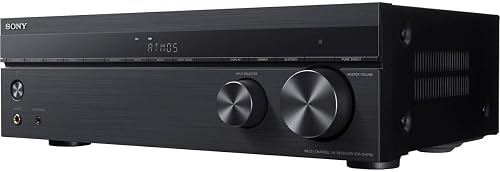


What an AV Receiver Actually Does
An AV receiver is the central nervous system of a home theater. It accepts HDMI signals from sources like Blu-ray players and streaming sticks, decodes lossless audio formats such as Dolby Atmos and DTS:X, amplifies that audio across five, seven, or more channels, and passes the video signal through to your display. Most current models also include Bluetooth or Wi-Fi for music streaming and auto-calibration microphones that measure your room acoustics and adjust the EQ to compensate. The Onkyo TX-SR494, rated 4.3 stars across 637 reviews, is a good example of this all-in-one approach: it puts out 160 watts per channel, offers 4 HDMI inputs plus Bluetooth, and handles both video switching and surround decoding in a single unit at $499.95. For anyone connecting a TV, a game console, and a disc player without a separate rack of components, that kind of integration is hard to beat.
What a Standalone Amplifier Does
A power amplifier takes a pre-amplified, line-level signal and turns it into the high-current output needed to move speaker drivers. It has no HDMI inputs, no room correction software, and no surround decoder. Its only job is to amplify, and because that is its only job, a good power amp can do it with very low noise and very high current headroom that multi-channel AV receivers often cannot match watt-for-watt at equivalent price points. This matters most with large floor-standing speakers that have low sensitivity ratings or complex impedance loads. Standalone amps pair with a separate preamp or AV processor, which handles source switching, volume, and decoding before handing the signal off.
The Case for an AV Receiver
For the majority of home theater builders, an AV receiver is the practical choice. One box handles HDMI switching so you are not running cables to a separate switcher, one remote controls everything, and built-in room correction like Yamaha YPAO or Audyssey MultEQ takes the guesswork out of speaker setup. The Marantz NR1510 illustrates this point: it packs 7 HDMI inputs, built-in Wi-Fi, and Marantz's proprietary tuning into a slim chassis at $700, earning a 4.4-star rating from 312 buyers. That kind of feature density in a single unit saves money compared to buying a quality preamp-processor and separate power amp separately. Setup time drops significantly as well, since you plug in one box rather than interconnecting multiple components with balanced or RCA cables.
The Case for a Separate Amplifier
Separate amplifiers make sense in two scenarios. First, if you own a high-quality AV processor and want more power or lower distortion for your front left and right speakers than the processor's built-in amp stage can provide, a two-channel or mono amplifier added to those channels is a direct upgrade path. Second, if you are building a dedicated listening room around a stereo setup rather than a full surround system, a quality integrated amplifier or power amp paired with a simple two-channel preamp will typically outperform an AV receiver at the same price for pure music listening, because the budget is not split across seven amplifier channels, a tuner, and HDMI switching logic. The trade-off is complexity and cost: you need at least two boxes where one would do.
Specs That Matter When Comparing the Two
When evaluating AV receivers, pay attention to continuous watts per channel measured at all channels driven simultaneously, not the peak or two-channel figures that some spec sheets lead with. HDMI input count matters too: a receiver with only two or three HDMI ports gets crowded fast when you add a 4K player, a game console, and a cable box. For standalone amplifiers, look at the damping factor and the rated current delivery, because high damping factor numbers indicate better control over woofer cones. In both categories, check the rated impedance: speakers nominally rated at 4 ohms demand an amp or receiver that can handle that load without clipping or shutting down on loud passages. The Sony STR-DH790, with 3,000 reviews and a 4.3-star average, is a widely purchased entry point that balances channel count, HDMI connectivity, and price for buyers new to the AV receiver category.
Which to Buy First
Start with an AV receiver if you are building your first home theater and own fewer than three source devices. It covers every functional role in one purchase and leaves room to upgrade speakers, a subwoofer, or a display before adding more components. Move to a separate amplifier setup if you have already maxed out what your receiver can do, if your speakers are consistently clipping the receiver at moderate volumes, or if you plan to split a two-channel critical listening system from your home theater. Many experienced builders end up with both: an AV receiver managing surround decoding and HDMI switching, with a separate two-channel amp handling the front left and right speakers through the receiver's pre-out jacks. That hybrid approach captures the convenience of the receiver with better performance on the channels where it matters most.
Common mistakes to avoid
- Comparing peak or burst wattage figures across brands instead of continuous all-channels-driven power, which leads to overestimating how loud a receiver will play cleanly.
- Buying a standalone amplifier without a preamp or processor to feed it, then discovering it has no way to control volume or switch between sources.
- Choosing an AV receiver with too few HDMI inputs for the number of sources you plan to connect, then needing an external switcher that adds latency.
- Assuming a higher watt-per-channel rating always means louder or better sound, when speaker sensitivity and room size are often more important factors.
- Overlooking impedance compatibility: running 4-ohm speakers on a receiver rated only for 8 ohms causes thermal shutdowns and can damage the amp stage over time.
- Spending the entire budget on an amplifier or receiver while leaving nothing for quality speaker cables and interconnects, which affects the signal before it ever reaches the amplifier.
Frequently asked questions
Can I use an AV receiver as an amplifier only?
Yes. Most AV receivers include pre-out jacks on the main channels, which let you bypass the internal amplifier stages and feed an external power amp. You can also simply use the internal amp while ignoring all the processing features you do not need. The receiver still works fine as an amplifier in that scenario, though you are paying for circuitry you are not using.
Do I need both an AV receiver and a separate amplifier?
Not at the start. Most home theaters run perfectly well with only a mid-range AV receiver driving all channels. Adding a separate amplifier becomes worthwhile only if your current receiver clips at your target listening volume or if you want noticeably better stereo performance on your front speakers. A receiver with pre-outs makes that upgrade possible later without replacing the entire unit.
Will a separate amplifier improve sound quality over an AV receiver?
It can, particularly for two-channel music and for speakers that are difficult loads. A dedicated power amp channels its entire power supply into amplification rather than splitting resources across seven channels and digital processing boards. That said, the difference is often subtle at moderate listening levels, and the receiver's built-in room correction can compensate for acoustic shortcomings that a bare power amp cannot address at all.
What is the difference between a stereo amplifier and an AV receiver?
A stereo amplifier drives two channels, typically left and right, and is designed primarily for music listening rather than home theater surround sound. An AV receiver drives five, seven, or more channels, decodes Dolby and DTS surround formats, and switches between HDMI video sources. If your priority is movies and TV with surround sound, the AV receiver is the right category. If your priority is two-channel music and you do not need surround, a stereo integrated amplifier often delivers better sound per dollar.
Is an AV receiver good for music as well as movies?
Yes, and most modern receivers include a Pure Direct or Direct mode that bypasses tone controls and video circuitry to send a cleaner signal path to your speakers. Receivers from brands like Marantz, Yamaha, and Onkyo pay close attention to the two-channel audio path alongside the surround features. For casual to serious listening, a quality AV receiver is more than adequate. Only dedicated audiophile listening at a high level typically benefits from moving to a separate stereo amp and preamp combination.